The idea that a fragrance could make you irresistible, transmitting subtle chemical signals that trigger attraction almost involuntarily, is one of the oldest promises in the perfume industry. Pheromone fragrances have grown into a category of their own, with explicit marketing and bold claims. The problem is that science does not really support the story. But that does not mean fragrances cannot work on the level of attraction; it means the mechanism is something else entirely.
At The Scent Nest, we do not sell pheromone fragrances. But we do carry fragrances that operate in exactly the territory that pheromone perfumes try to claim: intimate skin presence, quiet sensuality, that second-skin quality that draws people in without them quite knowing why. The difference is that ours do it through actual perfumery, not through marketing.
What pheromones are and why they work in animals
Pheromones are chemical compounds secreted by one organism that influence the behaviour or physiology of another organism of the same species. In insects and many mammals, the system operates through the vomeronasal organ (VNO), a sensory structure specialised in detecting species-specific chemosignals. In rodents, pheromones trigger reproductive, aggressive, or hierarchical behaviours with remarkable precision.
The issue with humans is that the VNO is vestigial: anatomically present in some individuals, but largely non-functional and lacking active neural connections to the brain. Research has not identified any specific human pheromone with a demonstrable and reproducible behavioural effect under controlled laboratory conditions.
What science says about pheromone fragrances
The most cited substances in commercial pheromone fragrances are androstenone and androstadienone, steroid-derived compounds that appear in sweat and other fluids. Studies testing these have produced contradictory results: some suggest that androstadienone may influence attention or mood in women under certain conditions, but the effects are small, contextual, and do not replicate what attraction means in real life.
A study published in PNAS (2022) examined 51 proposed human pheromone compounds and found no clear evidence that any of them function as pheromones in the rigorous scientific sense. The conclusion of leading researchers in this area is that while smell plays a role in human attraction, the mechanism is complex, cultural, individual, and far less direct than pheromone marketing implies.
In short: pheromone fragrances contain real substances, but the claims that these trigger attraction or sexual behaviour are significantly overstated relative to the available research.
Why smell still matters in attraction
Although demonstrable human pheromones in the marketed sense do not exist, smell plays a real and documented role in interpersonal attraction. A few mechanisms are well supported by research.
MHC compatibility (major histocompatibility complex): Repeated studies show that people tend to be attracted to the natural body odour of individuals with a different immune profile from their own, possibly as an evolutionary mechanism for genetic diversification. This has nothing to do with fragrances; it is the natural scent of skin.
Olfactive memory and emotional associations: Smell has the most direct connection to the limbic system of any sense. A fragrance that evokes something warm, safe, or pleasurable will be perceived as attractive independently of its chemical formula. This is the real power of well-constructed perfumery.
Skin-scent quality: Fragrances that behave like a second skin, that amplify natural scent rather than masking it, are consistently perceived as more sensual than prominent or aggressive fragrances. This is an empirical observation from perfumery with a plausible biological explanation.
What to look for instead of a pheromone fragrance
If you want a fragrance with real sensual effect, the right direction is not the "with pheromones" label, but a few concrete olfactive characteristics. White and animalic musks have a documented skin-close quality; they sit near skin, warm, and are frequently described as attractive without making any specific claims. Amber, labdanum, and musk notes are traditionally associated with sensuality not for marketing reasons, but because they are resinous, warm, and behave differently on each person's skin.
Fragrances in the skin-scent or musky families are built in exactly this direction: low projection, high skin presence, intimate evolution. They do not promise pheromones. They deliver something more useful: an olfactive presence that works at close range, in personal contexts.
Fragrances at TSN suited to those seeking real olfactive sensuality
Bois Impérial by Essential Parfums is a good example of a woody-aromatic fragrance with skin-scent behaviour. Vetiver and akigalawood create a discreet woody texture; white musk does the rest, close to skin, warm and constant. No promises. It works. 2 mL sample from 5.50 EUR at The Scent Nest.
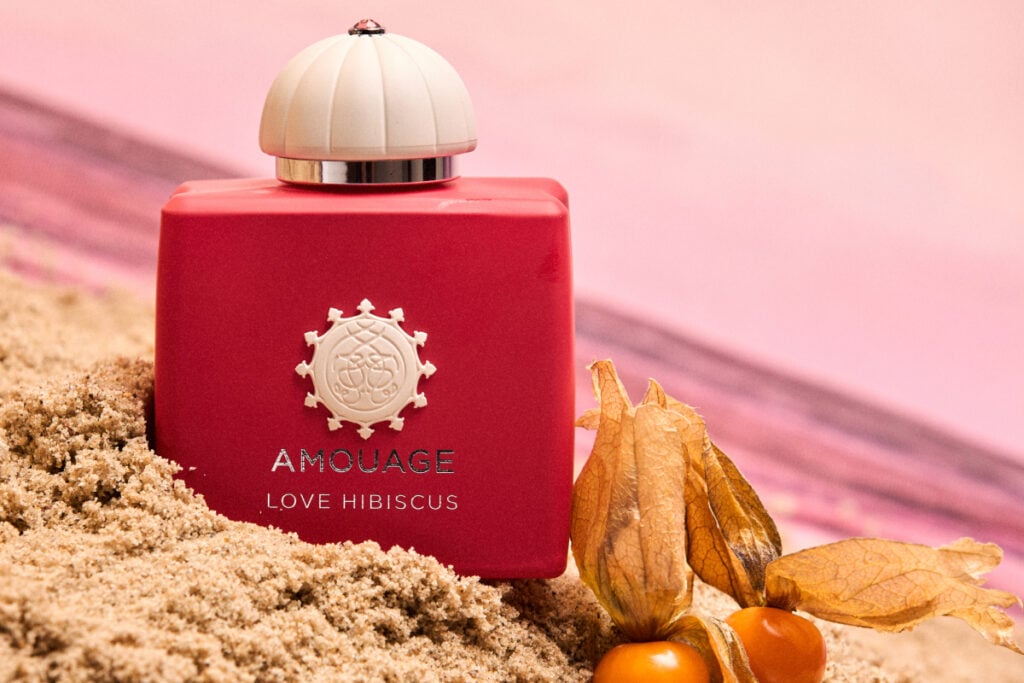
Guidance by Amouage carries labdanum, sandalwood, and rose, a combination that works on skin with a resinous, floral warmth that is difficult to ignore. It is a fragrance for short distances: you need to be close to perceive it fully, and that makes it effective in exactly the contexts where you want to be noticed.
A good fragrance does not attract through laboratory chemistry. It attracts through the way it behaves on your specific skin.
Closing thoughts
Pheromone fragrances are more of a marketing concept than a scientific one. The substances they contain are real, but their effects are modestly demonstrated and far from what the advertising implies. If you want a fragrance with genuine sensual effect, focus on musky, skin-close profiles and well-constructed fragrances with musk, amber, and labdanum.
Smell matters in attraction. But the mechanism is not a magic ingredient; it is compatibility, memory, and the way a fragrance integrates with your natural scent. That is the perfumery that actually works.
Frequently asked questions about pheromone fragrances
Do pheromone fragrances actually work?
There is no solid scientific evidence that commercial pheromone fragrances trigger attraction or sexual behaviour directly. The substances used (androstenone, androstadienone) have been studied, but results are inconsistent and measured effects are small and contextual. Marketing claims significantly exceed what the research demonstrates.
What are human pheromones?
Human pheromones are an active area of research, but no compound has been confirmed as a functional pheromone in Homo sapiens. The vomeronasal organ, the primary pheromone receptor in other mammals, is largely non-functional in humans. Smell plays a role in attraction, but through mechanisms more complex than direct chemical communication.
What fragrances are genuinely sensual?
Fragrances perceived as sensual tend to have close-to-skin presence, musky, amber, or warm woody notes, and a slow evolution that integrates with natural scent. Skin-scent, musky, or oriental-woody profiles built with white musk, labdanum, sandalwood, or vetiver are traditionally associated with sensuality.
What olfactive notes are associated with attraction?
Research on olfactive preferences shows that musky, vanilla, and woody notes are frequently perceived as attractive cross-culturally. White musk most directly mimics the natural scent of skin. Amber and labdanum notes have a warm resinous quality associated with proximity. Vanilla activates comfort centres in the brain with connections to positive memory.
Where can I find skin-scent or musky fragrances at TSN?
The Scent Nest catalog includes fragrances filtered by olfactive family, including skin-scent and musky. All are available as 2 mL samples for testing before investing in a full bottle.