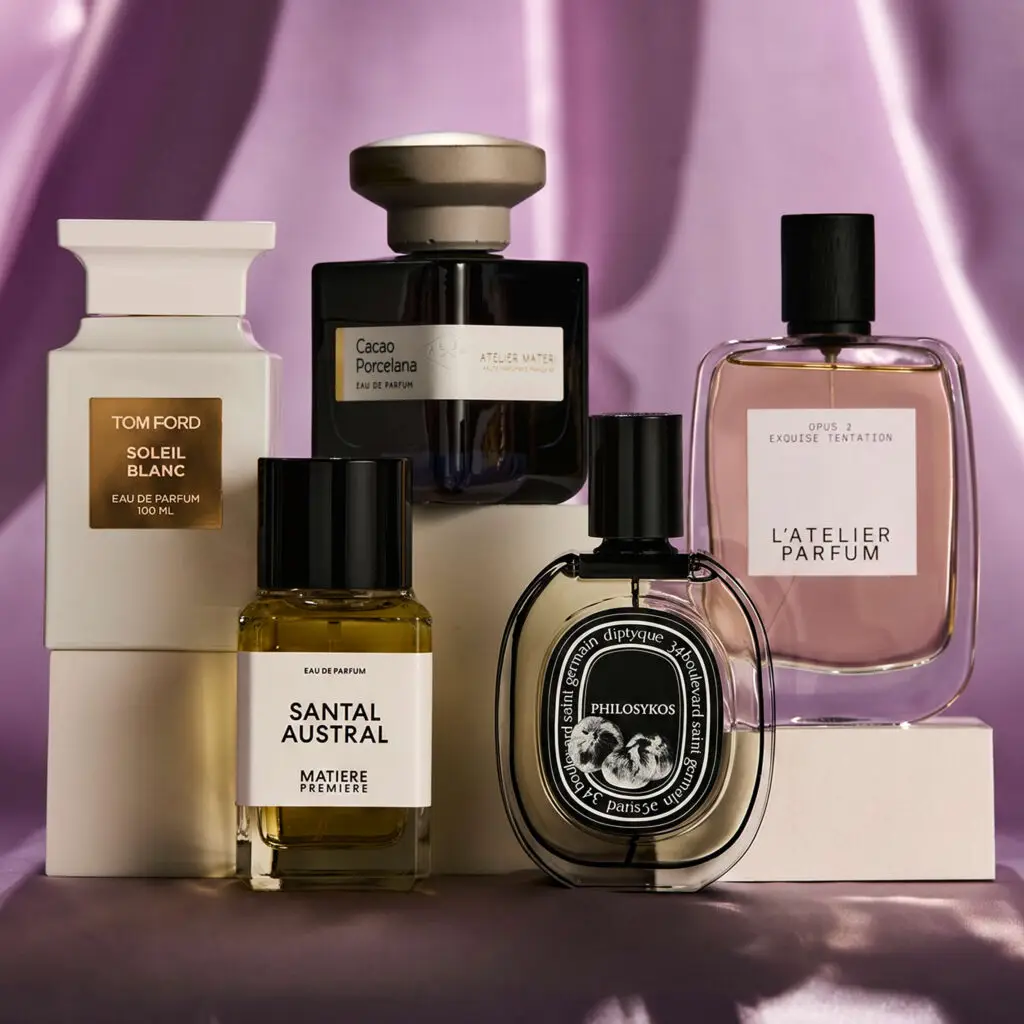
Olfactive family: Skin Scent
The skin scent category brings together fragrances that fade to the edge of perception, becoming an extension of the natural skin scent rather than a distinct fragrant presence. It is the olfactory of absolute intimacy: the fragrance only smelled by those who embrace you. Musk, ambrette or synthetic molecules like Iso E Super define this category.
Skin scents: the fragrance you feel, not see
Skin scents are the category of fragrances that refuse projection. They do not want to be noticed from a distance; they want to be discovered up close, to become a personal signature more than a conventional fragrance. This olfactory intention requires ingredients with low volatility and a capacity to merge with the individual chemistry of skin: white musk, ambroxan, Iso E Super, notemusk or new molecules with a full profile.
Paradoxically, skin scents can be extremely complex in composition, even if the final effect is one of simplicity and intimacy. Niche perfumery has invested significantly in this category, understanding that a fragrance that cannot be sensed from a distance is not necessarily a weak one. On the contrary: a well-conceived skin scent can be one of the most sophisticated and personalised olfactory experiences.
At The Scent Nest, skin scent selections are chosen for the quality of the base molecules and how well they merge with skin. If you are the type who loves discreet and intimate fragrance, this is your category; if you want to be noticed from across the room, look elsewhere.
Frequently asked questions about Skin Scent
What is a skin scent?
A skin scent is a fragrance that projects minimally and seems to merge with skin, becoming more of an amplification of the natural scent than a distinct fragrance. It is pure olfactory intimacy.
Do skin scents last on skin?
Yes, but you will not perceive them with the same intensity as an oriental or woody fragrance. Longevity is often good, but projection is intentionally low. You may stop sensing it, but others will when they embrace you.
Why do some people not smell their own fragrance?
Olfaction adapts to repetitive stimuli; you are the most exposed to your own fragrance. Skin scents amplify this effect: they project so subtly that the wearer often perceives nothing after a few hours.
How do I apply a skin scent for optimal effect?
Apply directly to warm skin: pulse points, neck, décolleté. Do not spray into the air or onto clothes. Body heat is essential to activate the molecules that merge with skin.